Note from an old DEC-hand
Ken Olsen once called VMS the best operating system for business. Technically, he had a point. The case for OpenVMS is rarely lost on engineering - only on marketing.
Old DEC-hand
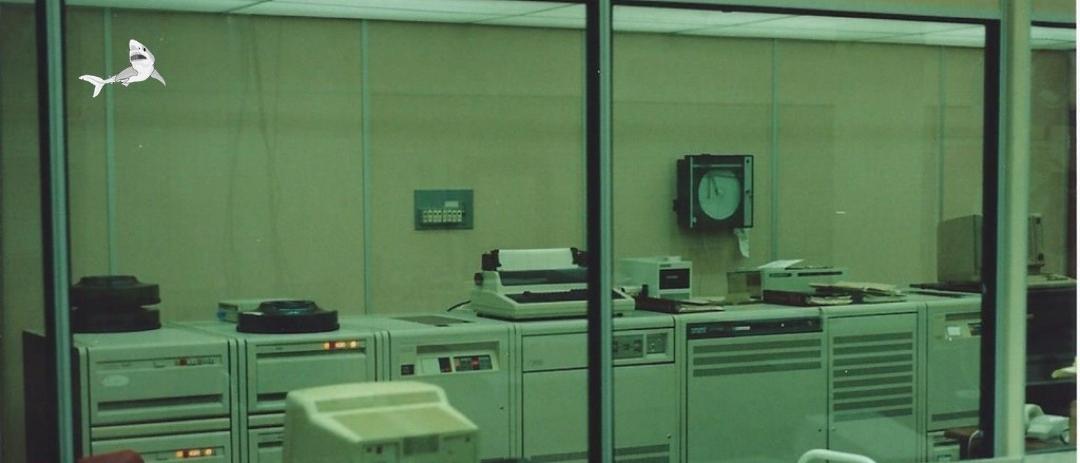
While browsing the pages of the VSI blog entries Blog — VMS Software, Inc., something I do from time to time, an entry from Darya Zelenina caught my eye: OpenVMS vs Linux cost comparison.
It was the title that caught my eye, as some years after I left HP’s employ, I wrote a paper for Red Hat around how to migrate from OpenVMS to Linux.
Before anyone starts accusing me of being a traitor, remember I was a self-employed IT consultant, so the brief sat neatly within my remit.
After reading Darya’s blog, I tried to find that paper, but time and several laptop changes defeated me, so I am having to dig into my somewhat dodgy memory.
The good thing about writing about Linux is the plethora of information which can be found online. I knew my OpenVMS stuff from experience, but Linux was a bit of a black hole for me, so I had to consult relevant online reports, for which Red Hat itself was a great source of information.
The bad thing about Linux is the plethora of information online, some of which was less than complimentary, but let’s put that to one side for the moment.
Listing the high-level differences between the two operating systems is something I had to revisit the internet for Difference between Linux and OpenVMS, as my geriatric memory didn’t stretch that far.
Fortunately, the aforementioned site provided a neat little table of some of the key differences2:
Linux
OpenVMS
1
It was developed by Linus Torvalds.
It was developed by Digital Equipment Corporation (DEC).
2
It was launched in 1991.
It was launched in 1977.
3
Its target system types are embedded systems, mobile devices, personal computers, servers, mainframe computers and supercomputers.
Its target system types are server and workstation.
4
Computer architectures supported by Linux are IA-32, x86-64, ARM, PowerPC and SPARC.
Computer architectures supported by OpenVMS are VAX, Alpha, IA-64 and x86-64.
5
Its kernel type is monolithic.
Its kernel type is monolithic with modules.
6
Its native APIs are Linux/POSIX.
Its native APIs are proprietary.
7
It has the preferred license of GNU GPLv2 (kernel).
It has the preferred license of “proprietary”.
8
The non-native APIs supported through its subsystems are Mono, Java, Win16 and Win32.
The non-native APIs supported through its subsystems are POSIX.
9
Its package management depends on the distribution.
Its package management is PCSI or VMSINSTAL.
10
It has a default GUI ‘on’.
It does not have a default GUI ‘on’.
11
File systems supported by Linux are ext2, ext3, ext4, btrfs, ReiserFS, FAT, ISO 9660, UDF and NFS.
File systems supported by OpenVMS are Files-11, ISO 9660, NFS and CIFS.
At the highest level, there doesn’t seem to be a massive technical difference between the two operating systems; line 7 is the key entry here.
I joined DEC in the Bob Palmer era (not its greatest epoch) and missed out on the Ken Olsen era, which by all accounts was the time to work for DEC. So I missed the “snake oil” comments; their legacy lived on.
Ken was convinced VMS (as it was known at that time) was the best operating system for businesses, and in fairness, he had some justification for thinking that from a technical standpoint.
Even now, OpenVMS has elements that are superior to Linux, but I digress. What Ken didn’t see coming (or probably cared about) was the advent of industry-standard technologies and open source: these two were a perfect storm for Ken and his vision of computing.
I don’t know why Ken, and I assume his advisors, had such a dislike for Unix (and I suspect Linux), after all, this is the man who, in 1986, was named as the “most successful entrepreneur in the history of American business” by Fortune magazine.
Anyway, getting back to my paper for Red Hat, I remember it was relatively difficult to highlight the areas where Linux obviously outperformed OpenVMS (maybe file systems), and I couldn’t find the smoking gun that Red Hat were looking for.
It should have been easy given Linux’s dominance at the time, but technically it wasn’t. People would migrate to Linux because of the marketing (OpenVMS traditionally hasn’t been very good at that) and because developers could easily download a distribution from linux.org.
In another universe, Ken Olsen might have embraced non-proprietary business models and the open-source community, and OpenVMS would have continued its path of creative engineering and continued to dominate multi-user IT systems for decades; if only.
So, where does this fit in with Darya’s blog entry? Well, in some ways the title of Darya’s blog sums up the whole discussion “Staying on OpenVMS or Migrating to Linux: A Strategic Cost Comparison”, the discussion is all around costs – purchase price, operating costs and in this case migration costs.
Decisions that were taken over 30 years ago by Ken Olsen and his team are still impacting all our lives today. Just think if Ken had made the right choice (easy to say in hindsight), then Darya’s blog might well have been titled “Why VMS1 continues to be the best option for your business, come and talk to us”; if only.
Notes:
1 I am assuming that if Ken Olsen had taken a different route back in the day, then the 1992 decision to rename the operating system to appear relevant might not have occurred.
2 Given the appropriate resources and backing, any technical differences between the two operating systems would have been minimal. I’ve had many conversations over the years with OpenVMS engineers over these and similar topics; it was never about technical ability; it’s always been about the business model and investment.
More articles
View all
When “it’s just running slow” hides a much bigger problem
A sluggish OpenVMS system is easy to treat as a single fault. On a mature environment it's often the tip of something harder to pin down. A look at why performance problems resist the obvious fixes, and how a Health Check finds the real cause.
The Uncertainty Principle: Can you rely on your OpenVMS system five years from now?
Your OpenVMS system is stable today. But could you say what state it will be in five years from now? A look at the factors that quietly erode reliability over time, and the practical steps you can take now to reduce the uncertainty.
The Rdb Conundrum and Ways to Solve It
Oracle's decision to end Rdb support on OpenVMS X86 has been on the cards for years. With the Malmö Bootcamp 2026 bringing the conversation into the open, we look at the options available to Rdb customers who want to plan their next move.
Comments are reviewed before they appear publicly.
Comments (0)
No comments yet. Be the first to add one.